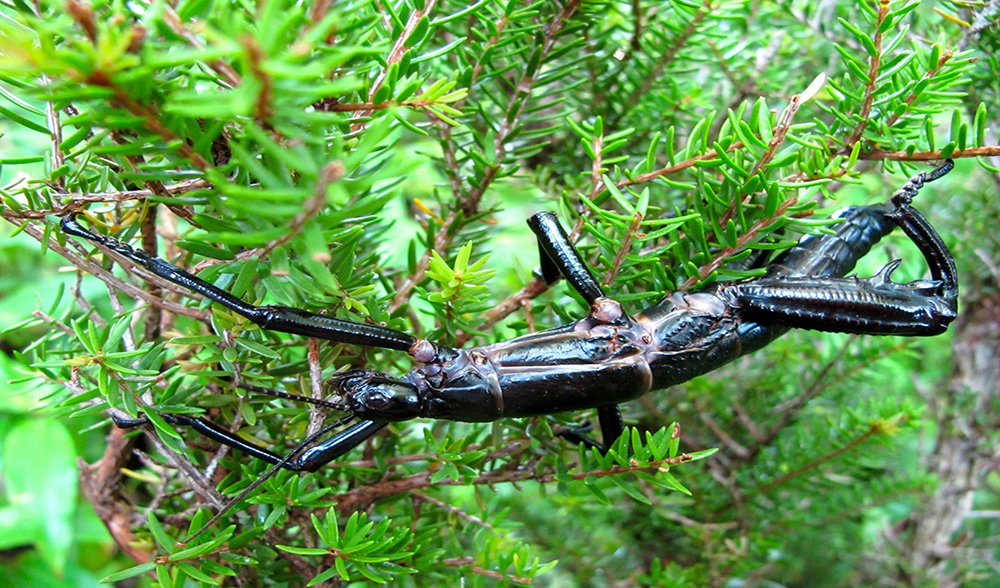
It was thought to be extinct by 1920, only to be rediscovered in 2001.
Lord Howe Island Insect. During the 19th century, this large insect prowled lord howe island in such numbers that fishermen would use them as bait. In a world first, zookeeper rohan cleave captured the amazing hatching process of a critically endangered lord howe island stick insect at melbourne zoo. The lord howe island phasmid is the world's rarest insect and the entire population was limited to one bush on a remote sea stack. Lord howe island stick insects are often called lobsters due to their size. Lord howe island stick insects were rediscovered by a ranger who had heard rumors of large black bugs near ball's pyramid in february of 2001. The researchers also compared the lord howe island museum specimens with one another, and found that the diversion there was about half a percent. It is, in fact, the lord howe island stick insect camping out on an inhospitable pyramid. Today, a tiny population survives on ball's pyramid, a steep, tiny volcanic sea stack about 12 miles southeast of. Until a handfull of these amazing stick insects were found clinging to a small bush on balls pyramid. The eggs incubate for over 6 months and until now the hatching process has never been witnessed. Lord howe island stick insects are endemic to the lord howe island group, a cluster of volcanic islands in a crescent shape in the tasman sea between australia and new zealand. Learn about this insect and efforts to bring it back from extinction. That chartreuse green insect is unfurling from its little egg to add to a slowly swelling captive population of lord howe. They were thought to be extinct for over 80 years. This wonderful photograph, which was one of the ten highly commended entrants in the 2012 new scientist eureka prize for science photography, captures an extremely special event.
Lord Howe Island Insect - Ecosystems & Zoos, World Zoos Come Together To Save Insects & Reptiles
LORD HOWE ISLAND STICK INSECT REPLICA Size 10cm Long ZOOS VICTORIA SOUVENIR | eBay. Lord howe island stick insects are endemic to the lord howe island group, a cluster of volcanic islands in a crescent shape in the tasman sea between australia and new zealand. Lord howe island stick insects are often called lobsters due to their size. This wonderful photograph, which was one of the ten highly commended entrants in the 2012 new scientist eureka prize for science photography, captures an extremely special event. Today, a tiny population survives on ball's pyramid, a steep, tiny volcanic sea stack about 12 miles southeast of. During the 19th century, this large insect prowled lord howe island in such numbers that fishermen would use them as bait. It is, in fact, the lord howe island stick insect camping out on an inhospitable pyramid. Until a handfull of these amazing stick insects were found clinging to a small bush on balls pyramid. In a world first, zookeeper rohan cleave captured the amazing hatching process of a critically endangered lord howe island stick insect at melbourne zoo. That chartreuse green insect is unfurling from its little egg to add to a slowly swelling captive population of lord howe. The lord howe island phasmid is the world's rarest insect and the entire population was limited to one bush on a remote sea stack. The eggs incubate for over 6 months and until now the hatching process has never been witnessed. Lord howe island stick insects were rediscovered by a ranger who had heard rumors of large black bugs near ball's pyramid in february of 2001. Learn about this insect and efforts to bring it back from extinction. The researchers also compared the lord howe island museum specimens with one another, and found that the diversion there was about half a percent. They were thought to be extinct for over 80 years.
Back from the brink: Lord Howe Island stick insect - Australian Geographic from www.australiangeographic.com.au
Lord howe island stick insects were rediscovered by a ranger who had heard rumors of large black bugs near ball's pyramid in february of 2001. It's a stick insect, a critter that masquerades as a piece of wood, and the lord howe island version was so large — as big as a human hand — that the europeans labeled it a tree lobster because of its size and hard. In a world first, zookeeper rohan cleave captured the amazing hatching process of a critically endangered lord howe island stick insect at melbourne zoo. Lord howe island stick insects are often called lobsters due to their size. This insect has been found on lord howe island. Lord howe island is the nesting site for hundreds of thousands of providence petrels ( pterodroma solandri). Phasmid is the amazing true story of the lord howe island phasmid, or stick insect.
It's a stick insect, a critter that masquerades as a piece of wood, and the lord howe island version was so large — as big as a human hand — that the europeans labeled it a tree lobster because of its size and hard.
Learn about this insect and efforts to bring it back from extinction. After a ship wrecked on lord howe island, a rat population invaded and eradicated a species of giant stick insect—or so researchers thought. Masters' labours, during three days collecting in june, 1869, and of those of mr. Lord howe island stick insects are endemic to the lord howe island group, a cluster of volcanic islands in a crescent shape in the tasman sea between australia and new zealand. That chartreuse green insect is unfurling from its little egg to add to a slowly swelling captive population of lord howe. Lord howe island is the nesting site for hundreds of thousands of providence petrels ( pterodroma solandri). I have a pretty big soft spot for insects, and as a supporter of conservation and protecting endangered species i do get so tired of the beautiful or cute animals getting all the attention. This insect has been found on lord howe island. Lord howe island stick insects were rediscovered by a ranger who had heard rumors of large black bugs near ball's pyramid in february of 2001. In a world first, zookeeper rohan cleave captured the amazing hatching process of a critically endangered lord howe island stick insect at melbourne zoo. A dryococelus australis, or lord howe island stick insect — one of the rarest insects in the world. It lives although darker than those found on lord howe island, these stick insects, from nearby ball's pyramid, are the same species. This wonderful photograph, which was one of the ten highly commended entrants in the 2012 new scientist eureka prize for science photography, captures an extremely special event. The collections from lord howe island in the fmmer are mainly the result of mr. Saving the lord howe island stick insect. And, despite being real, it is inhabited by fantastic creatures. Lord howe island has reefs, forests, and endemic species threatened by invasive rodents. Believed to be extinct for nearly 80 years, the phasmids were rediscovered on balls pyramid, a volcanic outcrop 23 kilometres off the coast of lord howe island. Lord howe island stick insect. The lord howe island phasmid is the world's rarest insect and the entire population was limited to one bush on a remote sea stack. During the 19th century, this large insect prowled lord howe island in such numbers that fishermen would use them as bait. The researchers also compared the lord howe island museum specimens with one another, and found that the diversion there was about half a percent. The lord howe island stick insect (dryococelus australis) or land lobster is a large, flightless stick insect that was, until recently, thought to be extinct. Today, a tiny population survives on ball's pyramid, a steep, tiny volcanic sea stack about 12 miles southeast of. For the lord howe island stick insect, the trouble began in 1918 when a shipwreck stranded a population of black rats on the small island. Found in the middle of nowhere off the coast of australia is a long thought to be lost insect. It's a stick insect, a critter that masquerades as a piece of wood, and the lord howe island version was so large — as big as a human hand — that the europeans labeled it a tree lobster because of its size and hard. Lord howe island stick insects are often called lobsters due to their size. Dryococelus australis, commonly known as the lord howe island stick insect or tree lobster, is a species of stick insect that lives on the lord howe island group. Learn about this insect and efforts to bring it back from extinction. Mass rodent poisoning on this remote but the lord howe project, years in the making, will be the largest rodent eradication undertaken on a permanently inhabited island anywhere in the.
Lord Howe Island Insect , It's Hard To Miss A Lord Howe Island Stick Insect, Sometimes Called A Tree Lobster.
Lord Howe Island Insect : Amazing Animals Pictures: Officially "The Rarest Insect In The World": The Lord Howe Island ...
Lord Howe Island Insect , Ross Stevenson Meets The Lord Howe Island Stick Insect - Youtube
Lord Howe Island Insect . The Lord Howe Island Land Lobster Is A Flightless Stick Insect.
Lord Howe Island Insect . This Wonderful Photograph, Which Was One Of The Ten Highly Commended Entrants In The 2012 New Scientist Eureka Prize For Science Photography, Captures An Extremely Special Event.
Lord Howe Island Insect . Learn About This Insect And Efforts To Bring It Back From Extinction.
Lord Howe Island Insect : During The 19Th Century, This Large Insect Prowled Lord Howe Island In Such Numbers That Fishermen Would Use Them As Bait.
Lord Howe Island Insect - Etheridge's Party, Which Visited The Island, At The Instance Of The Trustees Of That Ceylon, And Lord Howe Island.
Lord Howe Island Insect . Lord Howe Island Stick Insects Were Rediscovered By A Ranger Who Had Heard Rumors Of Large Black Bugs Near Ball's Pyramid In February Of 2001.
Lord Howe Island Insect - The Collections From Lord Howe Island In The Fmmer Are Mainly The Result Of Mr.